
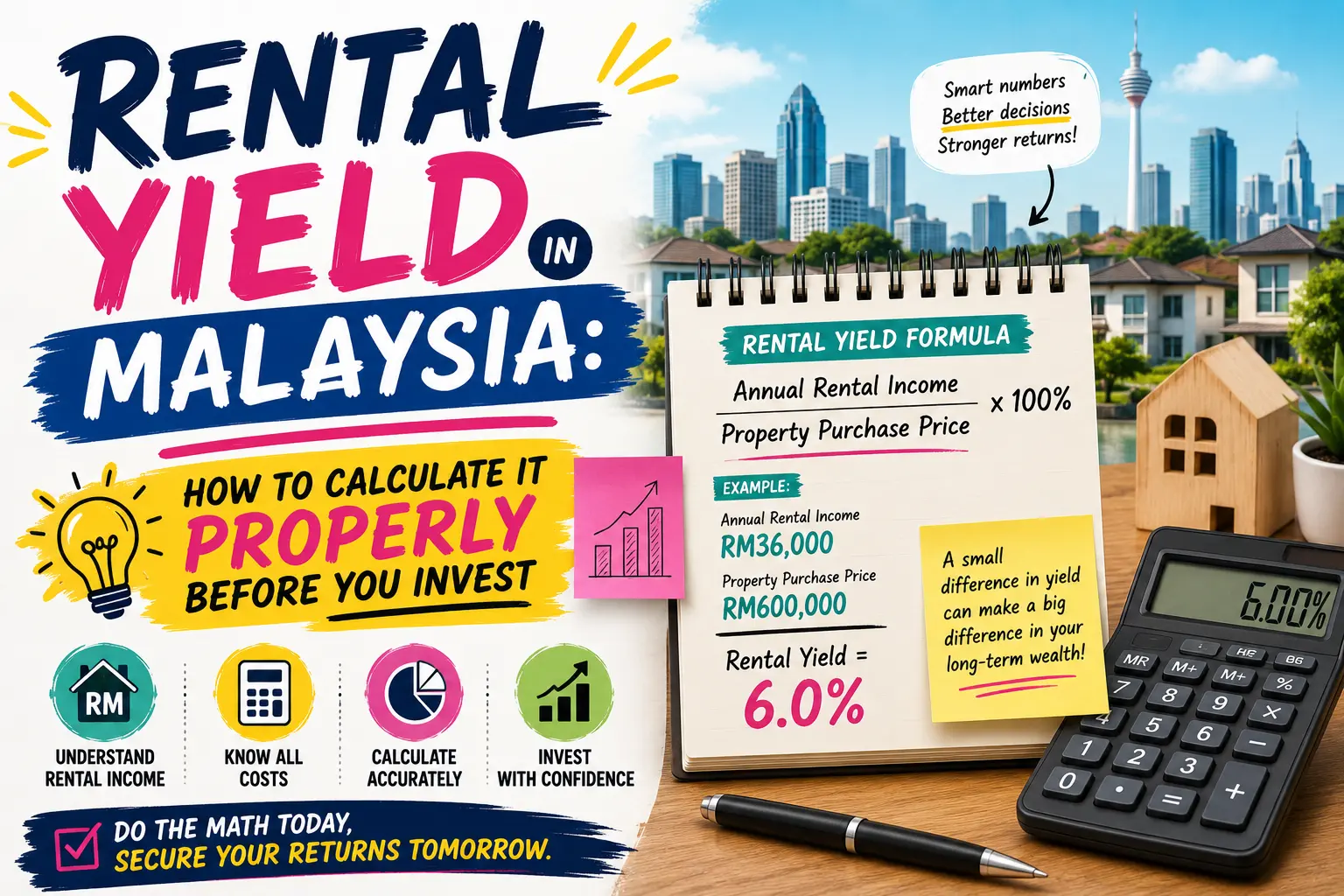
Gross yield is easy to calculate but can flatter a weak investment. Use net yield and realistic vacancy assumptions before buying Malaysian rental property.
Start with gross yield
Gross rental yield is annual rent divided by purchase price. A RM500,000 property renting for RM2,000 per month produces RM24,000 annual rent, or a 4.8% gross yield.
Gross yield is useful for quick screening, but it ignores almost every operating cost.
Move to net yield
Deduct maintenance fees, sinking fund where applicable, assessment, quit rent, insurance, repairs, agent fees, furnishing replacement and a vacancy allowance. Then divide the remaining annual income by your total capital cost.
For a furnished high-rise unit, replacement and maintenance can be significant over time.

Use realistic rent
Do not use the highest advertised rent in the building. Check actual competing units, occupancy and how long listings stay available. If many landlords offer incentives, the effective rent may be lower than the headline.
Model a conservative rent and a period of vacancy.
Include financing separately
Net property yield measures the asset. Your cash-on-cash return also depends on loan amount and interest cost. A property can show a reasonable gross yield while producing weak or negative monthly cash flow after financing.
Stress-test the loan rate and do not assume every year will be fully occupied.
Think about exit demand
Yield is not the only consideration. A specialised unit with a high current rent may be difficult to resell. Strong investments usually combine sustainable tenant demand with a reasonable future buyer pool.
If the numbers work only because you assume rapid capital appreciation, the rental yield is not doing enough of the work.
Practical next steps
- Calculate both gross and net yield.
- Model vacancy, repairs and financing separately.
- Use conservative rent rather than the highest advertised unit.
The Tera & Co. takeaway
Good property decisions come from combining market context with property-specific due diligence. Use broad market data to understand the environment, then make the final decision using financing, recent comparable transactions, condition, location, legal documentation and your own holding period.
Information is general in nature and is not legal, tax, investment or financing advice. Rules, rates and eligibility can change; verify material details with the relevant Malaysian authority or qualified professional.



Join The Discussion