
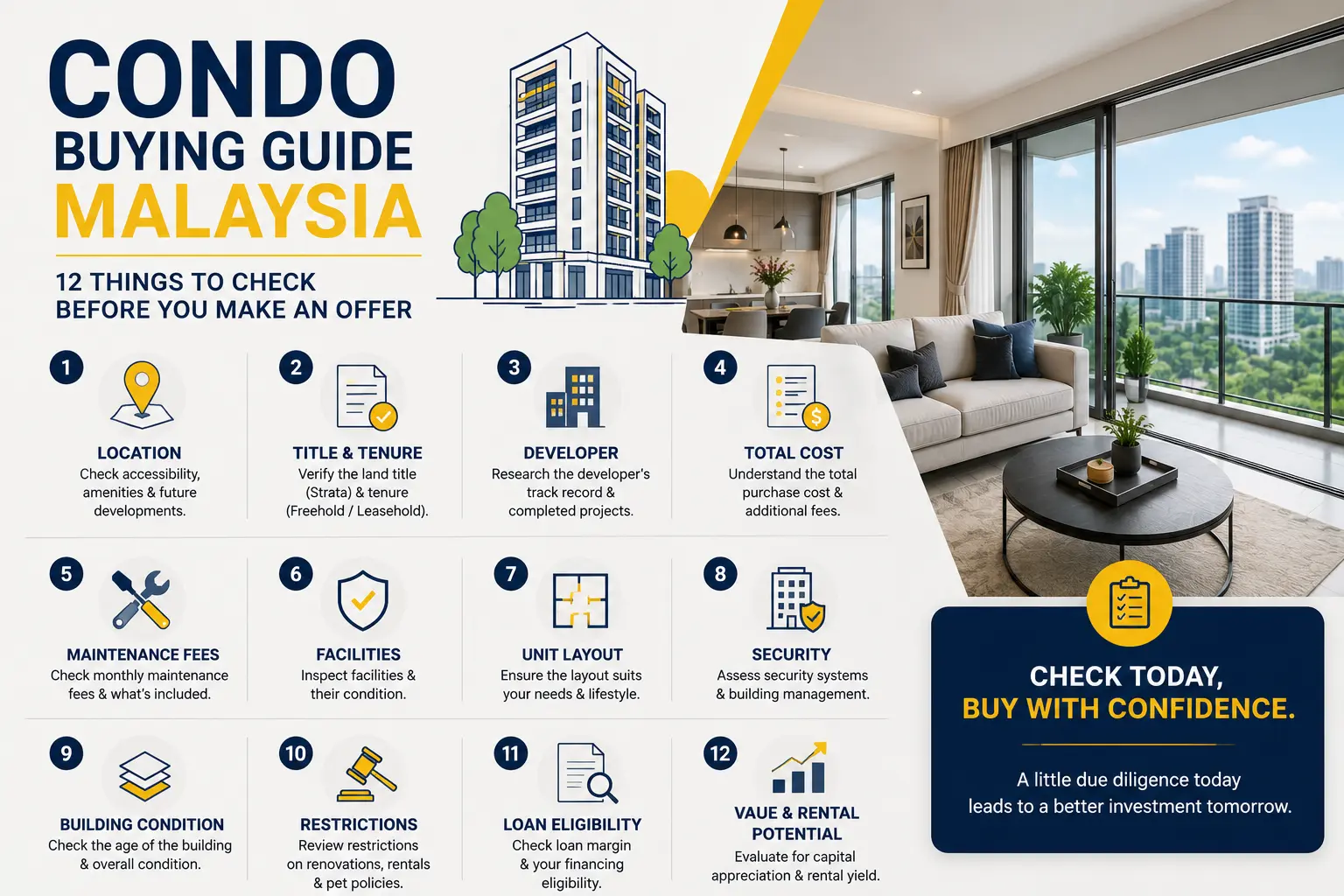
Condominium buyers should inspect more than the unit. Building management, sinking fund, density, lifts, parking and future supply can make or break the ownership experience.
1. Management quality
Walk through common areas. Look at cleanliness, broken equipment, access control, notice boards and how quickly defects appear to be repaired. Good management protects daily liveability and, over time, resale appeal.
Ask owners or residents about recurring issues rather than relying only on the sales gallery or listing agent.
2. Maintenance and sinking fund
Confirm the monthly maintenance charge and sinking-fund contribution. A very low fee is not automatically positive if it results in under-maintenance. A very high fee can reduce affordability and rental yield.
Ask whether there are outstanding major works or proposed special levies.

3. Density and lift ratio
A beautiful lobby can hide operational frustration. Consider how many units share each lift and how residents move during morning and evening peaks.
High density is not always bad, but it should be reflected in price and management capability.
4. Parking
Confirm the number, type and location of bays. Tandem parking, mechanical parking or distant bays can affect convenience and tenant demand.
If you need EV charging, check current rules and infrastructure rather than assuming installation will be simple.
5. Orientation and heat
Visit when the sun actually hits the unit. West-facing glazing can materially affect afternoon heat and air-conditioning use.
Views can also change if adjacent land is developed, so check surrounding parcels.
6. Noise
Listen from bedrooms with windows closed and open. Consider roads, rail, schools, entertainment areas, mechanical equipment and facilities decks.
Noise is difficult and expensive to fix after purchase.
7. Water and leaks
Check ceilings, bathroom edges, windows and air-conditioner ledges for staining or mould. Ask about previous water ingress.
For older buildings, recurring waterproofing issues can become a major management cost.
8. Short-term rental rules
If rental flexibility matters, understand the building’s rules and applicable regulations. Do not assume Airbnb-style use is allowed because other listings appear online.
Rules can affect investment plans and resident experience.
9. Title and tenure
Confirm freehold or leasehold status, strata title position and any restrictions in interest that could affect transfer.
Your lawyer can advise on the specific documentation.
10. Future supply
Map nearby projects under construction. New supply can affect future rent and resale competition.
This is especially important for small, investor-oriented layouts.
11. Actual transactions
Compare recent transactions, not just asking prices. Similar floors, views, sizes and renovation standards are the strongest comparables.
A premium can be justified, but it should be explainable.
12. Exit liquidity
Even if you intend to live there for ten years, ask who is likely to buy the unit from you later. Broad owner-occupier appeal usually creates a deeper resale market than a highly specialised product.
Buy the building as carefully as you buy the unit.
Practical next steps
- Inspect the building and management, not only the unit.
- Check maintenance charges, sinking fund and future special levies.
- Count competing units and upcoming supply before investing.
The Tera & Co. takeaway
Good property decisions come from combining market context with property-specific due diligence. Use broad market data to understand the environment, then make the final decision using financing, recent comparable transactions, condition, location, legal documentation and your own holding period.
Information is general in nature and is not legal, tax, investment or financing advice. Rules, rates and eligibility can change; verify material details with the relevant Malaysian authority or qualified professional.



Join The Discussion