

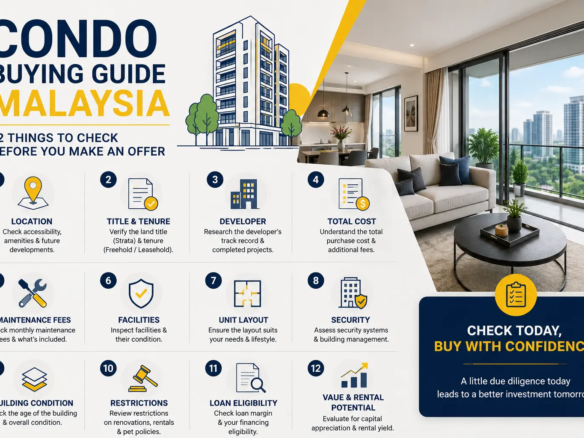
The deposit is only one part of the upfront cost. Malaysian buyers should also budget for legal work, stamp duties, valuation, renovation and emergency reserves.
The deposit is the obvious cost
Many buyers begin by thinking about the difference between purchase price and loan amount. That is important, but it is only the first layer of cash required.
Your actual amount depends on your loan margin, property price, valuation, buyer profile and transaction structure.
Legal and stamp-duty costs
Property purchases and loan documentation involve legal work and applicable duties. Rates and exemptions can change, so obtain a current quotation from a Malaysian lawyer for your exact transaction rather than relying on an old online calculator.
Ask for the quotation to separate professional fees, taxes or duties and disbursements so you understand what each amount represents.

Valuation gaps
For subsale purchases, the bank’s valuation may not match the price you agreed with the seller. If the bank lends based on a lower valuation, you may need more cash than expected.
This is one reason to check market evidence before committing to an aggressive offer.
Renovation and furnishing
A home that looks affordable before renovation can become expensive after kitchen work, air-conditioning, lighting, curtains, wardrobes, appliances and furniture.
Create a basic, comfortable move-in budget and a separate wish-list budget. Do not finance every cosmetic upgrade if it leaves you with no emergency cash.
Keep a reserve
Homeownership creates surprises. A leaking water heater, appliance failure or special levy does not wait for your savings to recover after completion.
The safest budget includes cash remaining after the keys are handed over. If buying the property empties your accounts, consider lowering the purchase price or delaying non-essential renovation.
Practical next steps
- Get a current legal-fee and duty quotation for your exact purchase.
- Allow for a possible bank valuation shortfall.
- Keep cash for repairs and emergencies after completion.
The Tera & Co. takeaway
Good property decisions come from combining market context with property-specific due diligence. Use broad market data to understand the environment, then make the final decision using financing, recent comparable transactions, condition, location, legal documentation and your own holding period.
Information is general in nature and is not legal, tax, investment or financing advice. Rules, rates and eligibility can change; verify material details with the relevant Malaysian authority or qualified professional.



Join The Discussion