

A practical Malaysian first-home checklist covering financing, booking, legal documents, inspections, completion and the costs buyers often underestimate.
1. Set a total budget, not just a purchase price
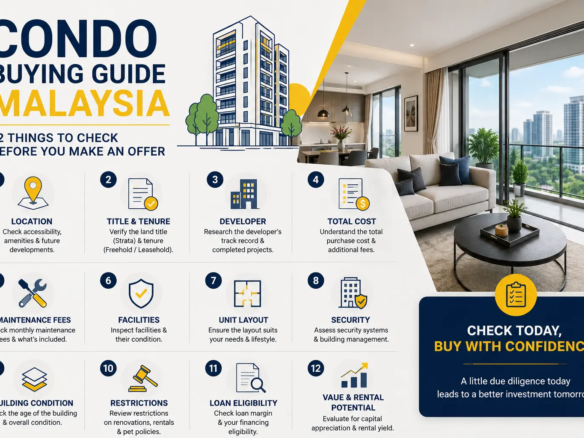
Your property budget should include deposit, legal fees, stamp duties, valuation, loan-related costs, renovation, moving, maintenance deposits and a cash reserve. A buyer who uses every available ringgit for the down payment starts ownership in a fragile position.
Decide the monthly housing cost you can live with comfortably. Include loan instalment, maintenance and sinking fund for strata property, assessment, quit rent, insurance and expected repairs.
2. Check financing early
Before serious viewings, speak with more than one bank or mortgage adviser. Understand your likely loan amount and the documents required. Review your credit commitments and avoid taking on unnecessary new debt during the application period.
An indicative approval is not a final loan offer, but it helps prevent wasted time on properties that are clearly outside your financing range.

3. Understand what you are buying
Confirm tenure, title type, built-up or land area, parking, accessory parcels, maintenance fees, restrictions in interest and whether the property is subject to any existing tenancy. For leasehold property, look at the remaining tenure and any state-consent requirements.
For stratified property, ask about management quality, sinking-fund position, major defects, planned special levies and enforcement of house rules.
4. Inspect the property properly
For subsale homes, check water pressure, leaks, electrical condition, air-conditioners, windows, doors, flooring and signs of unauthorised renovation. Visit at different times if possible to understand traffic, noise, sunlight and neighbouring activity.
For new property, conduct a detailed defect inspection after vacant possession and document issues within the applicable defect-liability process.
5. Read before signing
The booking process, Sale and Purchase Agreement and loan documentation create legal obligations. Use qualified Malaysian legal professionals and ask questions about completion periods, late-payment interest, apportionments, vacant possession and conditions precedent.
Never rely only on a verbal promise if it materially affects your purchase. Important commitments should be documented.
6. Keep cash after completion
New homeowners often discover that small costs arrive together: utility deposits, curtains, lights, moving, appliances, minor repairs and furniture. Keep an emergency buffer rather than completing the transaction with almost no liquidity.
The most successful first home is not the maximum home a bank allows you to buy. It is a home you can own without making every other part of life financially stressful.
Practical next steps
- Set a total cash budget including fees and renovation.
- Check financing before serious viewings.
- Keep documents, inspection notes and promised inclusions in writing.
The Tera & Co. takeaway
Good property decisions come from combining market context with property-specific due diligence. Use broad market data to understand the environment, then make the final decision using financing, recent comparable transactions, condition, location, legal documentation and your own holding period.
Information is general in nature and is not legal, tax, investment or financing advice. Rules, rates and eligibility can change; verify material details with the relevant Malaysian authority or qualified professional.



Join The Discussion