
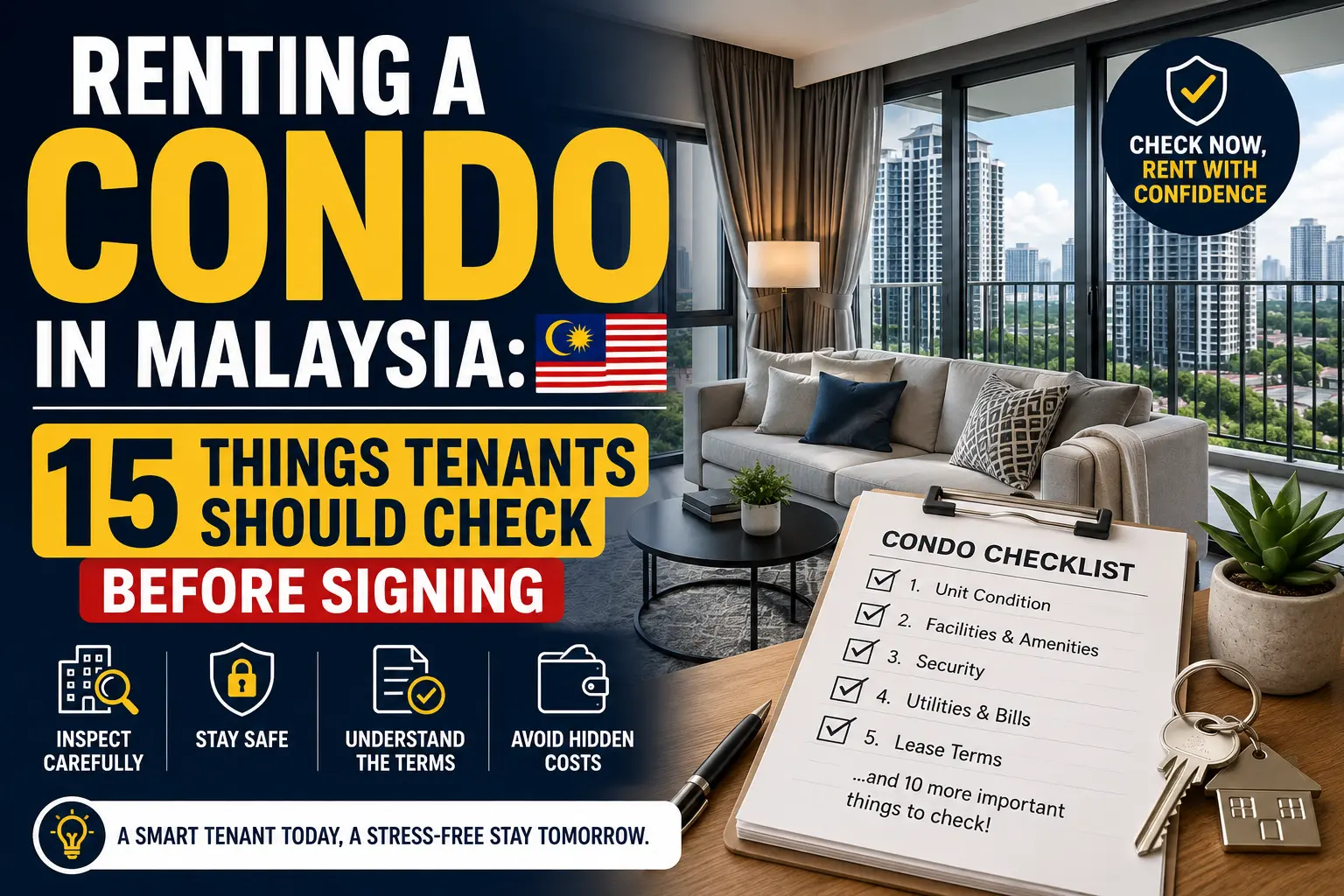
Before paying a rental deposit, inspect the unit, confirm what is included and understand the tenancy terms, building rules and maintenance responsibilities.
Confirm the total move-in amount
Ask for a clear breakdown of deposits, advance rental and any utility deposits. Understand when each amount is refundable and under what conditions deductions can be made.
Keep proof of every payment.
Inspect before accepting
Test air-conditioners, water heaters, appliances, lights, locks, windows and plumbing. Photograph existing scratches, stains and damage before moving in.
Attach or acknowledge the condition record where possible.

Get an inventory
For furnished units, list furniture, appliances, remotes, keys and access cards. Record obvious defects.
This reduces disagreement when the tenancy ends.
Understand repairs
Clarify the tenant’s responsibility for small repairs and the owner’s responsibility for larger failures. Read the exact tenancy clause rather than relying on assumptions.
Air-conditioner servicing is a common area that should be specifically understood.
Check building rules
Ask about parking, visitor access, pets, deliveries, move-in procedures, renovation restrictions and facility hours.
A building rule can affect daily life even though it is not written in the property advertisement.
Know the notice and renewal terms
Understand the tenancy period, renewal option, notice requirements and early termination conditions.
If you may relocate for work, flexibility can be valuable.
Verify who you are dealing with
Make sure the person collecting money is properly authorised to rent the property. Use traceable communication and documentation.
Do not transfer large sums solely because someone creates urgency.
Visit at realistic times
Traffic, noise and parking conditions can change dramatically at night or during peak hours. A second visit can prevent a poor decision.
The best rental is one that works on an ordinary Tuesday, not only during a quiet weekend viewing.
Practical next steps
- Document the unit condition before moving in.
- Understand deposits, repair clauses and termination terms.
- Verify the owner or authorised representative before paying.
The Tera & Co. takeaway
Good property decisions come from combining market context with property-specific due diligence. Use broad market data to understand the environment, then make the final decision using financing, recent comparable transactions, condition, location, legal documentation and your own holding period.
Information is general in nature and is not legal, tax, investment or financing advice. Rules, rates and eligibility can change; verify material details with the relevant Malaysian authority or qualified professional.

Join The Discussion