
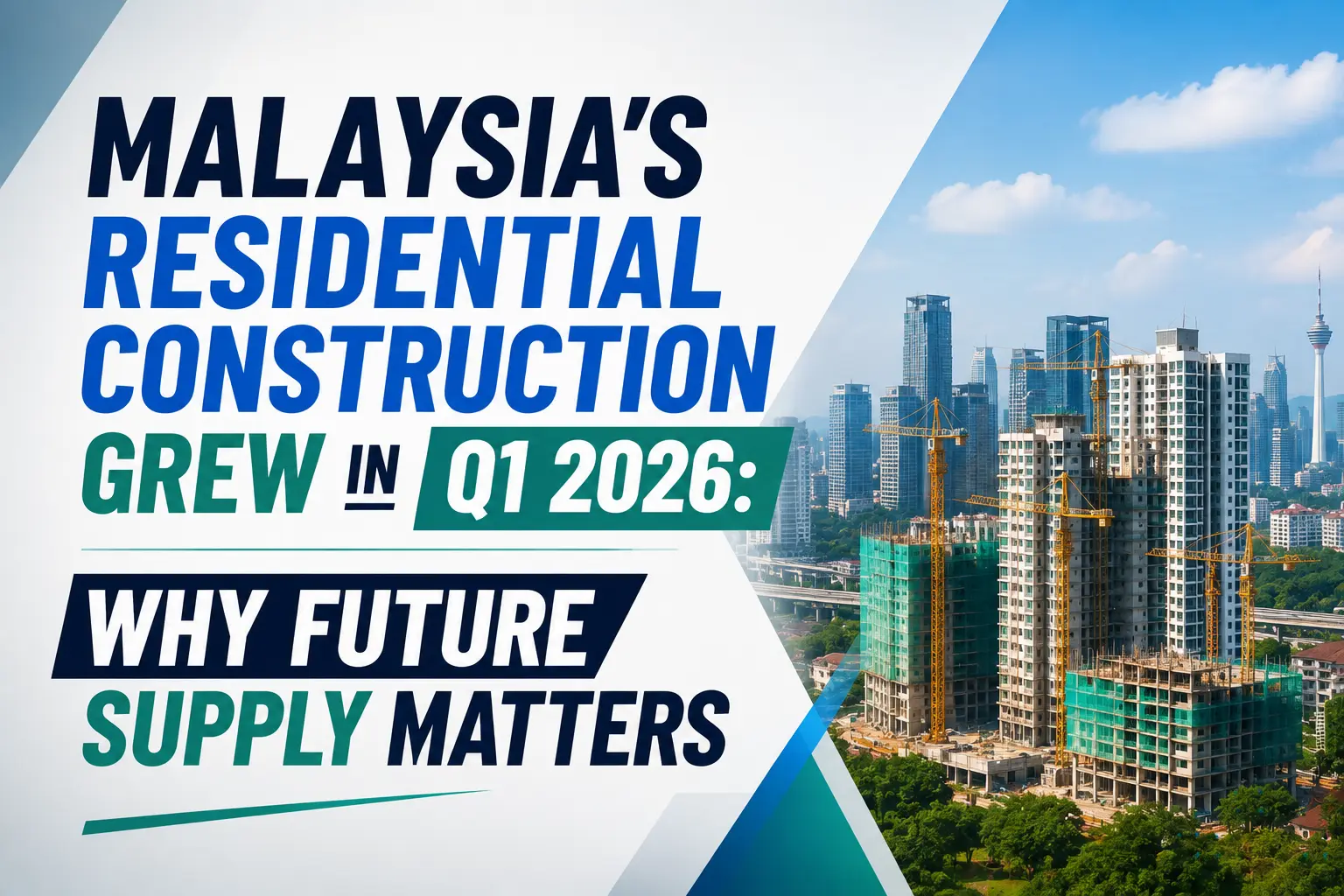
Residential construction activity continued growing in early 2026. Buyers should pay attention because future supply can affect pricing power, rents and resale competition.
Construction remained active
The Department of Statistics Malaysia reported that residential-building construction work grew 6.1% in the first quarter of 2026. Residential building work accounted for about RM10.5 billion of construction work done during the quarter.
For property consumers, construction statistics are not just an industry number. New supply affects the number of units competing for buyers and tenants in the years ahead.
Supply can be good for buyers
More supply creates choice. A buyer comparing several projects in the same corridor may be able to negotiate harder, request additional incentives or simply walk away from a layout that is not ideal. Competition can also pressure developers to improve facilities and product design.
However, new supply is only beneficial when it is matched by real demand and supporting infrastructure. A project can look attractive in a showroom but face difficult resale conditions if several similar developments complete at the same time.

Investors should map competing stock
Before buying for rental, identify existing units, projects under construction and future launches within the same tenant catchment. If hundreds or thousands of similar units are due to complete, future landlords may compete on rent, furnishing and incentives.
This is especially important for compact high-rise units where tenants can easily substitute one project for another. The more interchangeable the product, the more conservative your rental assumptions should be.
Owner-occupiers have a different priority
If you are buying to live in the property, some oversupply risk may be acceptable if the home genuinely improves your lifestyle and you plan to hold it for many years. But you should still consider resale liquidity. Life circumstances change, and a unit that is difficult to sell can reduce your flexibility.
Check access roads, public transport, schools, daily retail, building management quality and density. These factors help distinguish durable demand from launch-period marketing excitement.
Look beyond cranes and brochures
Visible construction activity can create the impression that an area is automatically booming. The better question is whether the incoming homes are supported by jobs, population, infrastructure and household affordability. Sustainable property demand needs people who can actually live in, rent or buy the completed stock.
Use construction growth as a prompt to research supply—not as a signal to buy on its own.
Practical next steps
- Map completed, under-construction and announced competing projects.
- For rentals, model a slower lease-up period and conservative rent.
- For own stay, prioritise usability but keep resale liquidity in mind.
The Tera & Co. takeaway
Good property decisions come from combining market context with property-specific due diligence. Use broad market data to understand the environment, then make the final decision using financing, recent comparable transactions, condition, location, legal documentation and your own holding period.
Sources and further reading:
Information is general in nature and is not legal, tax, investment or financing advice. Rules, rates and eligibility can change; verify material details with the relevant Malaysian authority or qualified professional.

Join The Discussion